Last updated October 15, 2026
DIY vs Professional ADU: The Pasadena Homeowner’s Decision Guide
California lets you be your own general contractor on an ADU. That’s the hook every DIY article leads with. What they skip is what happens in Pasadena when your owner-builder framing inspection fails and Building & Safety requires a third-party structural engineer to sign off before you can proceed. That single requirement, which we’ve seen trigger on projects all over Pasadena, routinely costs more than the contractor markup you were trying to avoid. This guide walks through the real math, the real risk points, and the three places where doing it yourself actually makes sense in Pasadena. For more guides & resources, visit our blog.
Quick Answer
For most Pasadena homeowners, hiring a professional ADU contractor is the lower-risk financial decision because the city’s permit process, hillside grading rules, and utility connection requirements create failure points that owner-builders discover too late. DIY genuinely makes sense for finish work, landscaping, and interior fixtures after the shell is complete. For foundation, MEP rough-in, roofing, and utility connections, the professional markup buys you accountability that owner-builder exposure cannot replace. Call (626) 658-3527 for a free estimate that puts your numbers in writing before you commit to either path.
Table of Contents
- What California’s Owner-Builder Exemption Actually Allows
- The Pasadena Risk Points No DIY Guide Mentions
- Three ADU Scopes Where DIY Genuinely Pencils Out in Pasadena
- Four ADU Scopes Where DIY Reliably Fails in Pasadena
- How Prefab ADUs Change the DIY Equation
- Timeline Math: 14 Months vs 9 Months and What It Costs You
- What a Written Contractor Proposal Should Contain
- Common Mistakes to Avoid
- When to Call a Professional
- Frequently Asked Questions
- The Bottom Line
What California’s Owner-Builder Exemption Actually Allows
California Code of Regulations Section 7065 allows a homeowner to act as their own general contractor on residential construction, including ADUs, provided they own the property and intend to occupy it. That’s the allowance. What the same code section exposes you to is far less discussed.
As an owner-builder, you assume legal responsibility for every subcontractor you hire, every inspection you schedule, every code requirement you overlook. You are the general contractor in the eyes of the state. That means if a framing sub you hired without verifying credentials does substandard work, you own that failure. If a plumbing inspection fails because the rough-in wasn’t vented properly, you own the correction. If a worker is injured on your property and your homeowner’s insurance doesn’t cover owner-builder construction (most policies don’t without a rider), you own the liability.
The part almost every DIY guide skips is the resale disclosure requirement. California Civil Code Section 1102 mandates that any owner-builder who performed work on a property must disclose that work to a buyer within six years of completion. Not one year. Six. That disclosure makes buyers ask harder questions, lenders apply additional scrutiny, and in some cases home insurance carriers require a structural inspection before issuing a policy. We’ve watched Pasadena homeowners discover this only at escrow, when a buyer’s inspector found nothing wrong but the disclosure alone triggered a re-negotiation downward. The professional markup on an ADU, spread across the equity you’re building, is often less than the concession that disclosure costs you.
What Owner-Builder Status Actually Requires
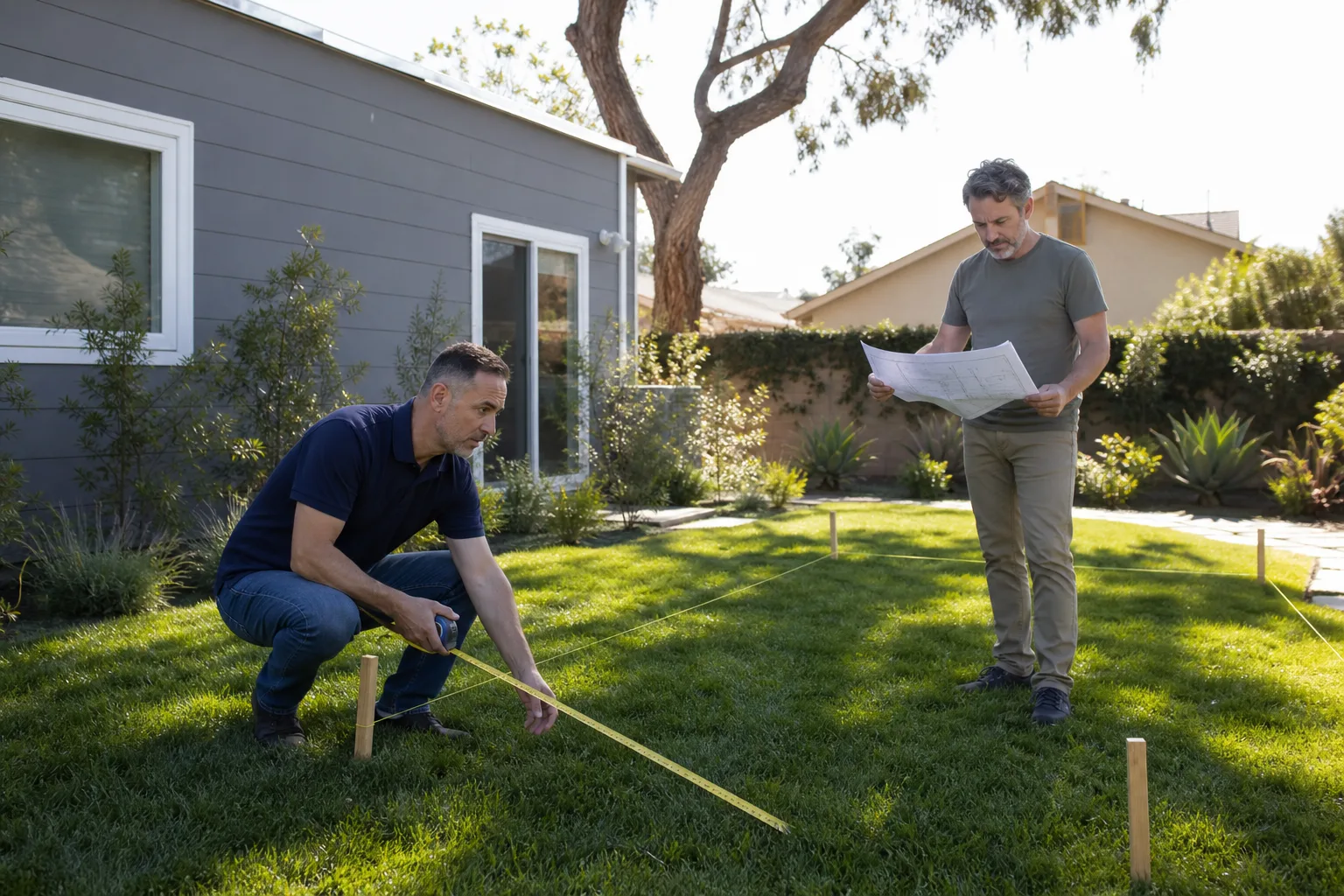
- You pull the permits. Pasadena’s Building & Safety office processes owner-builder permits, but the application requires you to attest that you understand the California Building Code requirements that apply to your project. You cannot claim ignorance later.
- You schedule and attend every inspection. Foundation, framing, plumbing, electrical, mechanical, insulation, drywall, final. Miss one and your project stops until it’s rescheduled, which in Pasadena during busy construction seasons can add two to three weeks per missed inspection.
- You hire, schedule, and manage every subcontractor. Pasadena has a limited pool of licensed subs willing to work for owner-builders, because owner-builder projects are statistically more likely to have payment disputes, unclear scope, and unplanned delays.
- You verify worker’s compensation coverage for every sub. If your sub is uninsured and gets hurt on your property, you are the employer in the eyes of California’s Division of Workers’ Compensation. That’s a claim against you personally.
- You manage the project budget and schedule. When a sub runs late, you recalibrate every downstream trade. When a material arrives damaged, you handle the return and re-order. When the city flags a code item, you diagnose it and correct it.
This is not a hypothetical list. It’s the weekly reality we see from owner-builders who call us mid-project to pull them out of a stall. By the time they call, the savings are gone and the stress has compounded for months.
The Pasadena Risk Points No DIY Guide Mentions
Pasadena is not a generic California jurisdiction. The city has specific conditions that make owner-builder ADUs riskier here than in, say, a flat tract-home suburb in Riverside County. Here are the four that matter most.
1. Hillside grading and foundation requirements. Roughly a third of Pasadena sits on hillside or sloped terrain. The city’s grading ordinance requires a soils report and engineered foundation plan for any ADU on a slope over 10%. An owner-builder who assumes a standard slab-on-grade foundation will work on their sloped lot gets stopped at plan check. The correction requires a geotechnical engineer, a structural engineer, and a re-submitted plan set. That’s $6,000 to $12,000 in unplanned costs before you’ve poured a yard of concrete.
2. Utility connection requirements. Pasadena Water and Power (PWP) requires a licensed electrical contractor to perform any new service connection or panel upgrade. That’s not a city preference. It’s a utility rule. An owner-builder can frame the walls and hang the drywall, but the moment the ADU needs a new subpanel or a service drop, PWP requires a licensed electrician’s signature. If you planned to do the electrical work yourself under the owner-builder exemption, that door closes at the utility meter.
3. Pasadena’s third-party inspection trigger. This is the risk point we opened with, and it deserves repetition because no national DIY blog covers it. Pasadena Building & Safety tracks owner-builder permits separately from contractor permits. When an owner-builder project fails an inspection, especially a structural one like framing, the city has the authority to require a third-party structural engineer to review and certify the work before the next inspection can be scheduled. That review typically costs $2,500 to $5,000, and the engineer’s findings often require corrective work that costs more than the original fix would have. A professional contractor who fails the same framing inspection simply corrects the item and calls for re-inspection, because their license and insurance already satisfy the city’s competency requirement. The owner-builder pays for the same failure twice.
4. Pasadena’s accessory dwelling unit ordinance layers. Pasadena has adopted the state’s ADU mandate with local modifications. Setbacks, height limits, and lot coverage rules vary by zone district, which means what worked for your neighbor across the street may not work for your lot. A professional contractor’s plan set includes a zoning analysis before design begins. An owner-builder who skips that step may design an ADU that can never be permitted as drawn.
Three ADU Scopes Where DIY Genuinely Pencils Out in Pasadena
We’re not anti-DIY. In fact, we tell our own clients exactly where they can save real money by doing work themselves after we’ve completed the shell. Here are the three scopes where owner labor actually reduces cost without increasing risk.
1. Interior Finish Work
Once the ADU has passed rough-in inspections and drywall is hung, the remaining interior work is high-effort but low-risk. Painting, trim installation, interior door hanging, baseboard installation, and cabinet hardware are all within reach of a homeowner with patience and a YouTube playlist. None of this work requires a permit in Pasadena, and none of it creates structural risk if done imperfectly. The savings are real: trim carpentry alone typically runs $4,000 to $8,000 on a 500-square-foot ADU in Pasadena.
2. Landscaping and Exterior Hardscape
Pasadena requires landscape plans for ADUs over a certain lot coverage threshold, but the installation work doesn’t require licensed contractors. Drought-tolerant planting, decomposed granite pathways, planter boxes, and drip irrigation are all DIY-friendly. Pasadena’s water conservation ordinance actually rewards low-water landscaping with faster plan check approval, so you’re not fighting the city on this scope. Expect to save $3,000 to $6,000 versus a landscape contractor.
3. Interior Fixtures and Finishing Details
Light fixtures (after electrical final), faucets and supply line connections (after plumbing final), towel bars, mirror installation, closet shelving, and smart home devices are all straightforward homeowner work. The key is that these items are installed after the relevant inspection passes, so you’re not altering inspected work. The savings on a full ADU of fixtures: $1,500 to $3,500.
Four ADU Scopes Where DIY Reliably Fails in Pasadena
These four scopes are where we see owner-builders lose the most money, and where the professional markup is cheapest insurance you can buy on a construction project.
1. Foundation Work
Foundation errors are the most expensive mistakes in residential construction, because everything built on top must be corrected if the base is wrong. Pasadena’s soil conditions vary dramatically within a few blocks: expansive clay in some neighborhoods, decomposed granite in others, and fill zones near the Arroyo Seco. A foundation designed for one soil type fails on another. We’ve corrected owner-builder foundations in Pasadena where the slab was poured without a soils report and cracked within the first year. The fix cost more than the original foundation should have.
2. MEP Rough-In (Mechanical, Electrical, Plumbing)
Rough-in errors are hidden inside walls, which means they’re only discovered at inspection or worse, after the walls are closed. In Pasadena, failed MEP inspections on owner-builder projects have a compounding effect: each re-inspection adds a fee and a scheduling delay, and repeated failures can trigger the same third-party review we described for framing. The plumbing, electrical, and HVAC rough-in on a single ADU involves roughly 60 individual code points. A licensed trade crew knows them all. An owner-builder learns them one failed inspection at a time.
3. Roofing
Pasadena’s roof loads are calculated for a specific seismic and wind exposure. A roof that’s under-framed or improperly flashed might pass visual inspection and leak two winters later. Roof failures don’t show up immediately, which is why the owner-builder’s six-year disclosure requirement is so dangerous here: you may sell the property before the problem manifests, but the buyer’s inspector may still flag the framing. The cost difference between a licensed roofer and a DIY roof on an ADU is typically $8,000 to $15,000. The cost of a failed roof discovered at resale is multiples of that.
4. Utility Connections
We covered PWP’s licensed contractor requirement for electrical connections above. The gas connection falls under SoCalGas rules, which also require licensed work for any new service or line extension. The sewer or septic connection, if the ADU can’t tie into the existing lateral, requires both city inspection and a licensed plumber’s signature. This is non-negotiable. An owner-builder who tries to connect utilities without the required licensed signature faces a stop-work order, a fine, and in some cases a requirement to expose and redo the work.
How Prefab ADUs Change the DIY Equation
Prefab ADUs have transformed the ADU conversation in Pasadena, and brands like Boxabl, Plant Prefab, and Tuff Shed-based units have made it genuinely possible for a homeowner to reduce the on-site construction complexity. But prefab changes the DIY equation in specific ways that are worth understanding before you commit.
What prefab actually removes from your plate: factory assembly of the wall panels, floor cassettes, and in some cases the entire module. The framing quality is controlled in a factory environment, which eliminates a huge source of on-site error. We’ve toured the Boxabl facility and the precision is real. The panel dimensions are correct to within a fraction of an inch, which is far better than most site-framed projects achieve.
What prefab does not remove from your plate: the permit package, the site preparation, the foundation, the utility connections, and the final assembly coordination. A prefab ADU still requires a Pasadena building permit with stamped plans from a California-licensed engineer. The foundation still requires a soils report if the lot is on a slope. The electrical still requires a licensed contractor’s work at the service connection.
Here’s the honest breakdown: prefab reduces the site skill requirement for the framing phase, which is a legitimate advantage for a homeowner who wants to manage their own project. But the phases that cause owner-builder failures in Pasadena (foundation, utilities, inspections, code compliance) are the same phases a prefab doesn’t eliminate. If you use a prefab brand, you still need either an owner-builder permit and the full management burden that comes with it, or a contractor to handle the site work and coordination. Where prefab genuinely shines is when a contractor coordinates the prefab delivery and installation with a fixed scope and a written price, which eliminates the on-site framing variability that causes cost overruns on site-built projects.
Timeline Math: 14 Months vs 9 Months and What It Costs You
California’s Department of Housing and Community Development has tracked owner-builder ADU timelines, and the numbers are stark. The average owner-builder ADU from permit application to final inspection takes 14 months. The average fully contracted ADU takes 8 to 10 months. That five-to-six-month gap is not an inconvenience. It’s a line item.
Here’s the math for a 500-square-foot one-bedroom ADU in Pasadena intended for rental income:
- Average monthly rent for a one-bedroom ADU in Pasadena: $1,800 to $2,400
- Lost rental income over five months of delay: $9,000 to $12,000
- Additional construction loan interest carried over the delay: $1,500 to $3,000 (depending on loan size and rate)
- City permit extension fees if the permit expires during the delay: $300 to $800
- Total financial exposure from the timeline gap: $10,800 to $15,800
Now compare that to the typical professional markup on a Pasadena ADU, which runs 15% to 20% of construction cost. On a $200,000 ADU, that’s $30,000 to $40,000. The timeline gap eats more than a third of the savings you were chasing, and that’s before accounting for the risk points we covered above. If the ADU is intended for a family member rather than a rental tenant, the financial exposure is different: you’re paying for the family member’s alternative housing during the delay, or you’re living with the construction site for five extra months.
The DIY savings math only works if everything goes right on the first try. In our experience with ADU Builders in Pasadena, first-try success on owner-builder projects is the exception, not the rule.
What a Written Contractor Proposal Should Contain
If you’re leaning toward hiring a professional, the proposal you receive should justify its price in writing. Here’s what separates a legitimate contractor proposal from a padded estimate, and how to tell whether you’re paying for accountability or just markup. For a detailed walkthrough, see our guide on How to Hire a ADU Contractor in Pasadena: A Step-by-Step Guide.
Elements of a Legitimate Written Proposal
- Line-item scope of work. Every trade, every material category, every allowance spelled out. If the proposal says “electrical” without specifying panel size, outlet count, and fixture allowances, you’re looking at a future change order.
- Fixed price language. The proposal should state that the price is fixed for the specified scope. If it says “estimate” or “estimate subject to change,” it’s not a fixed price. Know the difference.
- Allowances with caps. Finish materials like tile, flooring, and fixtures are typically allowances. The proposal should cap them or specify the exact product. If it says “allowance for tile: $4/sq ft” without specifying what happens if you choose a $6 tile, the change order is coming.
- Payment schedule tied to milestones. Deposits should not exceed 10% of the project total in California. Subsequent payments should be tied to completed inspections or phases, not arbitrary dates.
- Warranty language. The proposal should state what’s covered, for how long, and what the process is for a claim. California law mandates a one-year workmanship warranty on new construction. If the proposal doesn’t put that in writing, ask why.
- Change order process. The proposal should explain how scope changes are priced and approved. No verbal changes. Everything in writing.
- Licensing and insurance info. The proposal should list the contractor’s license number and insurance carrier. Verify both with the CSLB before signing.
At Benson ADU Pasadena, every project starts with a written price before any work begins. That’s not a sales tactic. It’s the only way you can compare our number against other bids and against the DIY path. If a contractor can’t put their price in writing, they haven’t actually priced the job. They’re guessing, and their guess will become your change order.
Common Mistakes to Avoid
- Underestimating the permit timeline. Pasadena’s plan check for a simple detached ADU runs 3 to 6 months depending on zoning review complexity. DIY guides quote statewide averages that don’t reflect Pasadena’s actual review queue. Budget the local timeline, not the national one.
- Skipping the soils report. Even on flat lots, Pasadena’s expansive clay zones can cause foundation movement that a standard slab wasn’t designed for. The $2,000 report is cheaper than the $40,000 foundation correction.
- Assuming PWP will connect a DIY electrical panel. PWP requires licensed electrical work for any service connection. If you built the electrical rough-in yourself, you may need to pay a licensed electrician to review and certify it before PWP will energize the ADU.
- Budgeting the DIY markup but not the DIY risk. The realistic owner-builder budget includes a 15% contingency for failed inspections, third-party reviews, and correction work. If your savings calculation doesn’t include that line, it’s not a real calculation.
- Forgetting the six-year disclosure. Owner-builder work follows the property for six years after completion. If you plan to sell within that window, the disclosure requirement will cost you either in price or in buyer confidence.
- Starting without a written scope. Even for DIY-finish work, write down exactly what you’re doing, what materials you’re using, and what your completion standard is. Projects without written scope drift, and in Pasadena’s inspection environment, drift becomes a failed inspection.
When to Call a Professional
If any of these apply to your situation, the professional path is the lower-cost path, even if the sticker price is higher. Your Pasadena ADU involves a sloped lot, a new utility connection, or a structural modification to the existing home. You plan to sell the property within six years of completion. You don’t have the time or appetite to manage subcontractors and inspections for 14 months. You want the project done in one construction season so the ADU starts producing rental income. Or you’ve already started as an owner-builder and hit a stall. All of these are legitimate reasons to bring in a professional. Benson ADU Pasadena offers free estimates in Pasadena. Call (626) 658-3527 to get a written price before you commit to either path. We’re happy to walk your specific lot, review your goals, and tell you honestly whether DIY makes sense for your scope. Sometimes it does. Often it doesn’t. Either way, you’ll know the real numbers.
Frequently Asked Questions
A DIY ADU in Pasadena typically saves 10% to 25% on paper, but the realistic savings after accounting for failed inspections, extended timelines, third-party reviews, and the utility connection requirements is closer to 5% to 10%, and in some cases the DIY path actually costs more. On a $200,000 ADU, the real-world savings is often $10,000 to $20,000, not the $40,000 to $50,000 DIY blogs advertise. Call (626) 658-3527 to get a written comparison for your specific scope.
Yes, California’s owner-builder exemption allows you to act as your own GC on an ADU, but Pasadena Building & Safety requires you to demonstrate code competency at every inspection stage, and the city can require third-party engineering review if your work fails an inspection. The exemption is real, but the exposure is also real.
California’s HCD data shows owner-builder ADUs average 14 months from permit application to final inspection, versus 8 to 10 months for a fully contracted build. The timeline gap costs roughly $10,800 to $15,800 in lost Pasadena rental income and carrying costs, which erases a large portion of the DIY savings.
Interior finish work like painting, trim, baseboards, and cabinet hardware is DIY-friendly and doesn’t require a permit in Pasadena. Landscaping and exterior hardscape are also good DIY scopes. Foundation, MEP rough-in, roofing, and utility connections should stay with licensed professionals due to code complexity, safety requirements, and utility company rules. For ongoing upkeep tips, check our Seasonal ADU Care for Pasadena: Year-Round Homeowner’s Guide.
Prefab eliminates the site framing complexity but not the permit package, foundation, utility connections, or inspection management. Brands like Boxabl and Plant Prefab reduce on-site skill requirements, but Pasadena’s utility rules still require licensed work at the service connection, and the permit process is identical to a site-built ADU.
A legitimate written proposal includes a line-item scope, fixed price language, allowances with caps, a payment schedule tied to milestones, warranty language, a change order process, and licensing and insurance information. If any of those elements are missing, the price is not real and change orders will follow. Once your ADU is complete, protect your investment with our ADU Builders Maintenance Checklist for Pasadena Homeowners.
The Bottom Line
The DIY-vs-professional ADU decision in Pasadena is not really about savings. It’s about risk. The city’s inspection process, hillside grading rules, utility requirements, and six-year disclosure obligation create failure points that owner-builders discover late, and the cost of those discoveries routinely exceeds the contractor markup they were avoiding. DIY makes sense for finish work after the shell is complete. For everything structural, utility-related, or permit-critical, the written price and accountability of a professional contractor is the cheaper path. Benson ADU Pasadena home to get your project started with a free estimate, or browse our Home Addition Contractor in Pasadena and Room Addition Contractor in Pasadena services if your scope extends beyond the ADU itself.
Written by Troy Eastman, Owner at Benson ADU Pasadena, serving Pasadena since 2006.